

Opuntia gosseliniana var. Santa Rita (Santa Rita Prickly Pear) – Complete Growing and Care Guide
Botanical name:
Opuntia chlorotica ssp. gosseliniana var. 'Santa Rita'
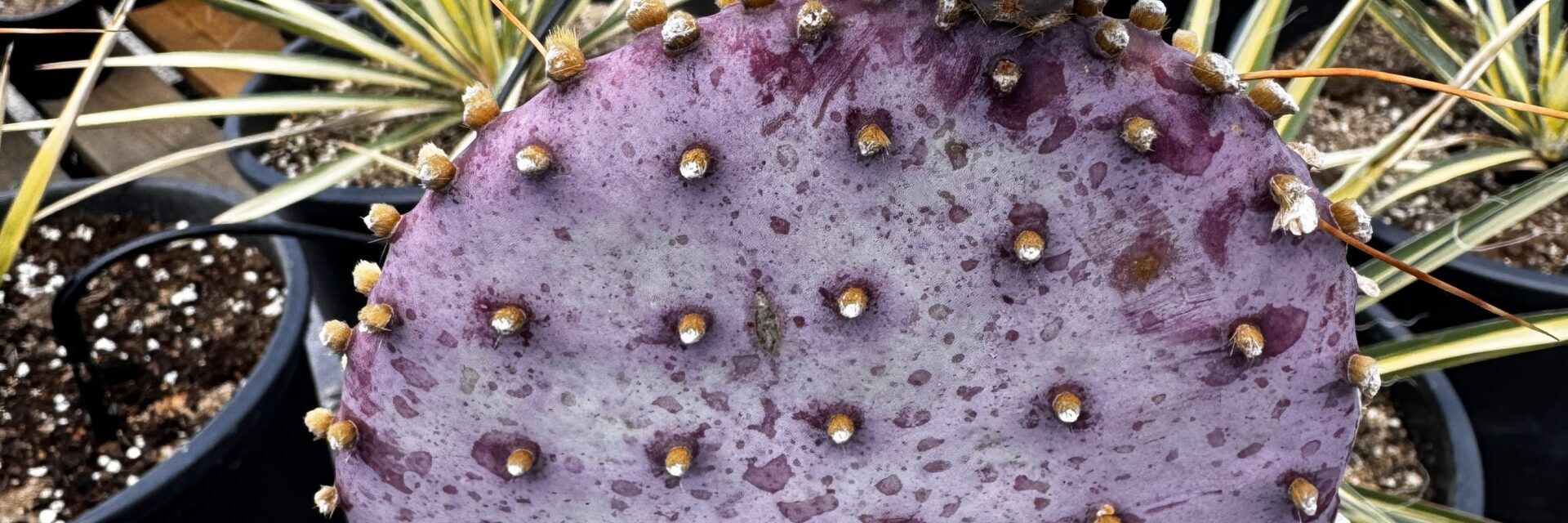
Opuntia gosseliniana var. Santa Rita is one of the most visually striking cold-hardy opuntias, valued for its vibrant purple coloration and spreading, sculptural form. Native to the deserts of the southwestern United States and northern Mexico, this variety forms a low, branching structure of flat pads that create a bold, architectural presence in arid and xeriscape landscapes.
Over time, Opuntia Santa Rita develops into a dense, spreading shrub, typically reaching 1–2 meters (3–6 ft) in height and often wider than tall. Its rounded pads are blue-green in warm seasons but transform into intense shades of purple, violet, and pink under cold temperatures or drought stress. This seasonal color shift makes it one of the most dynamic and decorative cacti for landscape use.
Adapted to harsh desert conditions, Opuntia Santa Rita thrives in full sun and requires sharply drained soil to prevent rot. It is highly drought-tolerant and performs best in hot, dry environments. While moderately cold-hardy, it can tolerate temperatures down to approximately -12°C to -15°C (10°F to 5°F), especially when kept dry during winter.
In late spring to early summer, mature plants produce bright yellow flowers, often with orange or reddish centers, followed by purple to reddish fruits. These blooms add seasonal contrast and attract pollinators.
With its dramatic color changes, low-maintenance nature, and strong visual impact, Opuntia gosseliniana var. Santa Rita is an excellent choice for xeriscape gardens, gravel landscapes, slopes, and large containers where bold color and structure are desired.
Plant Overview
Opuntia gosseliniana var. Santa Rita is a fast-adapting, spreading cactus known for its vibrant seasonal color changes and broad, sculptural pads. Native to the deserts of the southwestern United States and northern Mexico, this variety stands out for its ability to shift from blue-green tones in summer to intense purple and violet shades during cold or drought stress.
In its natural habitat, Opuntia Santa Rita grows in dry, rocky, and sandy soils, often forming wide, low shrubs that spread horizontally over time. Instead of a vertical trunk, it develops layered pads that branch outward, creating a dense, architectural mass that works exceptionally well as a ground cover or mid-height accent in xeriscape designs.
One of its defining characteristics is its dramatic color transformation. The pads intensify into deep purple hues under environmental stress, making it one of the most visually dynamic cacti available. This color shift is not a sign of damage, but a natural protective response to cold and sun exposure.
Opuntia Santa Rita thrives in hot, sunny climates and is extremely drought-tolerant once established. It requires sharply drained soil to prevent root rot, especially in regions with winter moisture. While it tolerates moderate cold, it performs best in dry conditions with full sun exposure year-round.
Like most opuntias, it is easy to grow when basic conditions are met. The most important factor for success is avoiding excess moisture and ensuring excellent drainage.
Growing Tips
-
Plant in full sun to achieve the strongest purple coloration and compact growth.
-
Use sharply drained, mineral soil (gravel, sand, or cactus mix).
-
Water very sparingly once established. Overwatering is the primary risk.
-
Avoid heavy, clay-rich soils unless amended with mineral material.
-
Protect from prolonged winter moisture rather than focusing only on cold tolerance.
-
Allow space for horizontal spread, as plants expand wider with age.
When grown in proper conditions, Opuntia Santa Rita is a highly resilient, low-maintenance plant that delivers strong visual impact through both structure and color.
Opuntia Santa Rita Care Guide
Caring for Opuntia gosseliniana var. Santa Rita is simple when grown in the right conditions.
This desert cactus prefers full sun, sharply drained soil, and minimal watering.
Below are the key aspects of maintaining a healthy and long-lived plant.
How Often to Water Opuntia Santa Rita
Opuntia Santa Rita is extremely drought-tolerant and adapted to long dry periods. In its natural habitat, rainfall is infrequent and soils drain quickly, so the plant is highly sensitive to excess moisture rather than drought.
During the growing season, water only when the soil has completely dried out. In containers, this typically means watering every 10–14 days in warm weather, while plants in the ground often require little to no supplemental watering once established.
In winter, watering should be kept to an absolute minimum. Excess moisture during cold periods is the most common cause of rot and plant decline, especially in climates with wet winters. Always allow the soil to dry fully between waterings.
🌵Opuntia Santa Rita plants available in our nursery
Healthy, cold-hardy Opuntia Santa Rita plants grown in our desert garden nursery. Suitable for containers, rock gardens, and xeriscape landscapes.
Lighting Needs for Opuntia Santa Rita
Opuntia Santa Rita thrives in bright, sunny conditions and performs best when grown in full sun. In its native desert habitat, it is exposed to intense sunlight throughout the day, which supports strong pad development and enhances its vibrant purple coloration.
For optimal growth, choose a location that receives at least six hours of direct sunlight daily. Plants grown in insufficient light may develop elongated, weaker pads and remain more green rather than developing their characteristic purple tones.
When grown in containers, Opuntia Santa Rita should be placed in the sunniest possible location, such as a south-facing terrace, balcony, or open garden space. Indoors, it is generally not suitable unless placed in extremely bright conditions, as low light will quickly reduce its vigor and color intensity.
Soil and Fertilizer Secrets
Opuntia Santa Rita thrives in sharply drained soil and is highly sensitive to excess moisture around its roots. In its natural habitat, it grows in sandy, rocky, and mineral soils where water drains quickly and the root zone remains dry and well aerated.
For garden planting, excellent drainage is critical. If your soil is heavy or clay-based, it should be amended with gravel, coarse sand, or small stones to prevent water retention and reduce the risk of rot.
When grown in containers, use a fast-draining cactus or succulent mix with a strong mineral component. Materials such as pumice, perlite, lava rock, or coarse sand are ideal and closely replicate natural desert conditions.
Fertilization needs are minimal. Opuntia Santa Rita is well adapted to poor soils and typically does not require regular feeding. If desired, a light application of a balanced fertilizer in spring is enough to support healthy growth during the active season.
Temperature and Climate Requirements
Opuntia Santa Rita is well adapted to hot, dry climates and performs best in regions with intense sunlight and low humidity. Native to the deserts of the southwestern United States and northern Mexico, it naturally grows in environments with high summer temperatures and limited rainfall.
Once established, Opuntia Santa Rita can tolerate moderate cold, especially when grown in well-drained soil. Mature plants are generally hardy down to approximately -12°C to -15°C (10°F to 5°F), particularly in dry winter conditions.
The most critical factor for winter survival is not just temperature, but moisture. Wet soil during cold periods significantly increases the risk of rot, making excellent drainage essential in cooler climates.
For optimal performance, plant Opuntia Santa Rita in a sunny, exposed location where water drains quickly after rain or snow. In areas with wet winters, raised beds, gravel-based planting, or sloped terrain can greatly improve long-term success and plant health.
Potting and Repotting Opuntia Santa Rita
Opuntia Santa Rita adapts very well to container growing when planted in a fast-draining soil mix and a stable container. As the plant matures and produces more pads, it spreads outward and can become wide and slightly unbalanced, so choosing a sturdy pot is important.
Terracotta or heavy ceramic pots are ideal, as they provide stability and help excess moisture evaporate more efficiently. Always ensure the container has large drainage holes to prevent water from accumulating around the roots.
Repotting is needed only occasionally, typically every few years, as Opuntia Santa Rita does not require frequent disturbance. The best time to repot is in spring, at the start of the active growing season.
When repotting, carefully remove the plant (using gloves or tools due to spines), shake off excess old soil, and inspect the roots for any signs of rot. Place the plant in fresh, well-draining soil and avoid burying the pads too deep, as this can increase the risk of moisture-related issues.
How to Propagate Opuntia Santa Rita
Opuntia Santa Rita is very easy to propagate, most commonly from pads (cuttings), which is the fastest and most reliable method. Unlike many other desert plants, it naturally produces segments that can be used to grow new plants with minimal effort.
To propagate, select a healthy pad and remove it cleanly at the joint. Allow the cut surface to dry and callous for several days in a shaded, well-ventilated area. This step is essential to prevent rot after planting.
Once calloused, place the pad upright in a well-draining, mineral soil mix. Do not water immediately—wait about 5–7 days, then begin light watering. Roots typically begin to form within a few weeks under warm conditions.
Propagation from seeds is also possible but much slower and less commonly used. Pad propagation is strongly preferred due to its simplicity and high success rate.
As the new plant establishes, it will begin producing additional pads and gradually form a spreading structure similar to the parent plant.
How to Encourage Opuntia Santa Rita to Bloom
Opuntia Santa Rita produces bright yellow flowers, often with orange or reddish centers, typically in late spring to early summer. Flowering occurs on mature pads and becomes more consistent as the plant establishes and expands.
To encourage blooming, provide full sun and ensure the plant is grown in sharply drained soil. Plants grown in partial shade may produce fewer flowers and develop weaker growth.
Watering should remain minimal and well-controlled. Overwatering or excessive fertilization can reduce flowering, as Opuntia Santa Rita is naturally adapted to nutrient-poor, dry environments.
Warm temperatures and strong sunlight are key factors for reliable blooming. Mature, well-established plants exposed to long periods of sun are far more likely to produce abundant flowers.
After flowering, the plant may produce colorful fruits, adding additional seasonal interest to the landscape.
How to Properly Prune Opuntia Santa Rita
Opuntia Santa Rita requires minimal pruning, as it naturally forms a spreading, well-balanced structure. Regular trimming is not needed to maintain its shape.
Pruning is mainly done to control size, remove damaged pads, or improve overall form. Pads can be selectively removed at the joints to reduce spread or reshape the plant. This is especially useful in smaller gardens or container settings.
When pruning, use gloves and clean tools, and remove pads cleanly at the connection point. Avoid cutting through pads, as this can lead to poor healing and increased risk of rot.
If pads become damaged, diseased, or overly crowded, removing them helps improve airflow and overall plant health.
Removed pads can be reused for propagation, making pruning both a maintenance and propagation opportunity.
Overwintering Opuntia Santa Rita
Opuntia Santa Rita is moderately cold-hardy and can tolerate freezing temperatures when grown in well-drained soil and exposed to full sun. It performs well in many temperate climates, especially where winters are dry.
The most important factor during winter is keeping the plant dry. In regions with wet winters, excess moisture can quickly lead to rot, even if temperatures are not extremely low. Planting in raised beds, gravel-rich soil, or sloped areas helps prevent water from accumulating around the roots.
Young plants and container-grown specimens may benefit from additional protection during colder periods. Moving pots to a sheltered location or protecting them from prolonged rain and snow can improve survival.
In suitable conditions, established plants require very little winter care, as long as drainage is excellent and the plant receives sufficient sunlight.
How to Plant Opuntia Santa Rita
Planting Opuntia Santa Rita correctly is essential for long-term success. This desert cactus thrives when placed in sharply drained soil and exposed to full sun. Whether grown in containers or planted directly in the ground, drainage and proper positioning are the key factors for healthy development.
Below are the two most common planting methods depending on your setup.
Planting Opuntia Santa Rita in Containers
-
Choose a wide, stable container such as terracotta or heavy ceramic to support its spreading growth.
-
Ensure the pot has large drainage holes to prevent excess water from accumulating.
-
Use a fast-draining cactus or succulent mix with mineral components like sand, pumice, or perlite.
-
Position the plant so the base of the pads sits slightly above the soil surface.
-
Place the container in a sunny location such as a terrace, balcony, or open garden space.
-
Water lightly after planting, then allow the soil to dry completely between waterings.
Planting Opuntia Santa Rita in the Ground
-
Select a location with full sun exposure throughout most of the day.
-
Prepare the planting area with sharply drained soil, especially if the native soil is heavy.
-
Incorporate gravel, coarse sand, or small stones to improve drainage.
-
Plant slightly above ground level to avoid water collecting around the base.
-
Backfill with the amended soil and gently firm it around the plant.
-
Water lightly after planting to help settle the soil.
Other Popular Types of Opuntia
Opuntia Santa Rita is just one of many striking species within the Opuntia genus. These cacti are valued for their sculptural pads, drought tolerance, and ability to thrive in sunny, dry environments with minimal care.
Different opuntia species vary in size, growth habit, spine density, and cold hardiness, making them suitable for a wide range of uses—from ground cover and slope stabilization to bold accent plants in xeriscape and desert-style gardens.
If you appreciate the vibrant color changes and spreading form of Opuntia Santa Rita, you may also want to explore other species that offer equally strong visual impact and resilience in arid conditions.
You can explore more species in our Opuntia collection.
You May Also Like
Common Pests and Problems of Opuntia Santa Rita
Opuntia Santa Rita is a highly resilient cactus and rarely experiences serious pest or disease issues when grown in full sun and well-drained soil. Most problems are related to excess moisture, poor drainage, or unsuitable growing conditions rather than pests.
Pests
Opuntia Santa Rita is generally pest-resistant, but occasional issues may occur, especially on container-grown plants.
The most common pests include:
-
Cochineal scale (white, cottony patches on pads), which feed on plant sap.
-
Scale insects, which attach to pads and weaken the plant over time.
-
Mealybugs, typically found in sheltered areas between pads.
In most cases, infestations are minor and can be managed by rinsing with water, manual removal, or using horticultural oils or insecticidal soap.
Plant Diseases
Diseases are uncommon and usually linked to excess moisture or poor drainage.
The most common issue is rot, affecting roots or pads due to prolonged exposure to wet soil. Symptoms may include soft, discolored tissue and collapse of pads.
Fungal spots may occasionally appear in humid conditions, but these are typically minor and rarely impact overall plant health.
Ensuring sharply drained soil, allowing the soil to dry between waterings, and maintaining good airflow are the most effective ways to prevent problems.
Where to Buy Opuntia Santa Rita Plants
If you are looking to add this vibrant, color-changing cactus to your garden or collection, Opuntia Santa Rita plants are available in our online shop. We offer carefully grown specimens suitable for both landscape planting and container cultivation.
Our plants are selected for strong root systems and healthy pad development, ensuring they establish quickly and perform well in a variety of conditions. Whether you are designing a xeriscape garden, a gravel landscape, or a bold container display, Opuntia Santa Rita is an excellent low-maintenance choice with strong visual impact.
Healthy, well-rooted Opuntia Santa Rita plants grown in our desert garden nursery:
Quick Reference
Is Opuntia Santa Rita Safe to Handle?
Opuntia Santa Rita is not considered toxic to humans or pets. However, it can still pose a physical hazard due to its spines and tiny hair-like glochids, which can easily irritate the skin.
Contact with the pads may cause discomfort, as the glochids are very fine and can embed in the skin, leading to irritation or small injuries. For this reason, it is recommended to handle the plant with gloves or tools.
In general, it is safe to grow in gardens and around homes, but it should be placed in areas where accidental contact is less likely, especially around children or pets.
Final Thoughts
Opuntia Santa Rita is one of the most visually dynamic cold-hardy cacti for sunny gardens and dry landscapes. With its vibrant purple coloration and broad, sculptural form, it stands out as a bold accent in xeriscape and modern garden designs.
When planted in sharply drained soil and exposed to full sun, this species is easy to grow and requires very little maintenance. Whether used as a spreading feature in a gravel garden or grown in a container on a bright terrace, Opuntia Santa Rita adds strong structure, seasonal color variation, and lasting visual impact to any outdoor space.
FAQ About Opuntia Santa Rita
How fast does Opuntia Santa Rita grow?
Opuntia Santa Rita has a moderate growth rate. In favorable conditions, it can produce several new pads each season and gradually spread outward, forming a dense, wide shrub over time.
Is Opuntia Santa Rita cold hardy?
Yes, Opuntia Santa Rita is moderately cold hardy. When planted in well-drained soil, it can tolerate temperatures down to approximately −12°C to −15°C (10°F to 5°F), especially in dry winter conditions.
Can Opuntia Santa Rita grow in pots?
Yes, it grows very well in containers when provided with excellent drainage. Use a fast-draining cactus soil mix and place the plant in full sun for best results.
How often should Opuntia Santa Rita be watered?
Water infrequently. Allow the soil to dry completely between waterings. Overwatering is the most common cause of problems.
Does Opuntia Santa Rita bloom?
Yes, mature plants produce bright yellow flowers, often with orange or reddish centers, typically in late spring to early summer.
What soil is best for Opuntia Santa Rita?
Opuntia Santa Rita prefers sharply drained, mineral-rich soil. Mixes containing gravel, pumice, or coarse sand are ideal to prevent excess moisture and reduce the risk of rot.
Guides
If you want to learn more about growing desert plants and yuccas, explore our detailed guides below. These articles will help you create a healthy environment for your plants and improve your gardening success.