
Yucca elephantipes (Spineless Yucca / Giant Yucca) – Complete Growing and Care Guide
Botanical name:
Yucca elephantipes
Common name: Spineless Yucca / Giant Yucca
Origin: Central America (Mexico, Guatemala)
Plant type: Evergreen tree-like yucca (multi-trunk / cane-forming)
Height: 300–900 cm (10–30 ft) outdoors; typically 150–300 cm (5–10 ft) indoors
Spread: 150–300 cm (5–10 ft)
Sun exposure: Full sun to bright indirect light (tolerates indoor conditions)
Soil: Well-drained soil; cactus or sandy mix preferred
Cold hardiness: approx. -3°C to -5°C (23 to 18°F) – not frost hardy
Landscape use: Indoor plant, patios, containers, warm-climate landscapes
Key characteristics
- Plant type: Yucca (evergreen, tree-like / cane-forming)
Cold hardiness: Zone 9–11
Sun exposure: Full sun to bright indirect light
Water needs: Low to moderate (very low once established outdoors)
Growth size: Medium to large (especially in outdoor conditions)
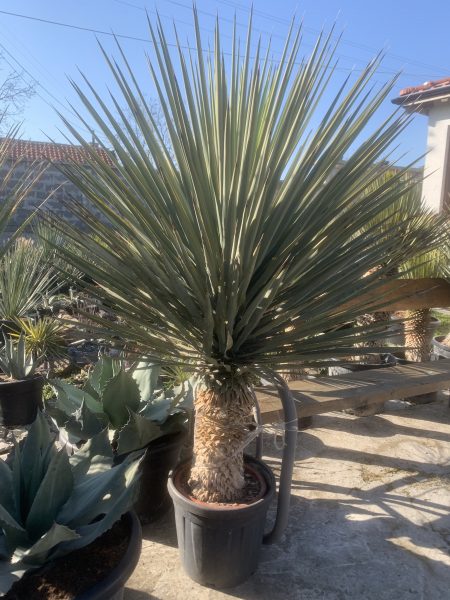
Yucca elephantipes (Spineless Yucca) is a popular, fast-growing yucca known for its smooth, spineless leaves and elegant, tree-like form. Native to Central America, this species develops thick cane-like trunks that branch over time, creating a tropical, architectural look suitable for both indoor and outdoor environments.
Unlike hardy outdoor yuccas such as filamentosa or gloriosa, Yucca elephantipes is much softer in appearance and feel. Its long, flexible, deep green leaves lack sharp spines, making it a preferred choice for homes, offices, and public spaces where safety and aesthetics matter.
This yucca adapts exceptionally well to indoor conditions, thriving in bright indirect light but also tolerating lower light environments better than most desert plants. Outdoors, it performs best in warm climates with full sun to partial shade and well-drained soil.
Yucca elephantipes is drought-tolerant once established but appreciates occasional watering, especially when grown in containers. Overwatering remains the most common issue, so allowing the soil to dry between waterings is essential.
Unlike cold-hardy yuccas, this species is sensitive to frost and typically tolerates only light, brief drops to around -3°C to -5°C (23 to 18°F). In cooler climates, it is best grown in pots and brought indoors during winter.
Mature outdoor plants can produce large, branched flower spikes with creamy white flowers, although flowering is rare in indoor specimens.
With its clean, modern look, ease of care, and versatility, Yucca elephantipes is an excellent choice for interior design, patios, and warm-climate gardens where a soft, tropical yucca aesthetic is desired.
Yucca elephantipes Care Guide
Caring for Yucca elephantipes is simple when you understand one key principle — avoid overwatering. Unlike desert yuccas, this species tolerates slightly more moisture, but still requires well-drained soil and controlled watering. It adapts well to indoor conditions, making it one of the easiest yuccas to grow in homes and offices.
In warm climates, it can also be grown outdoors, where it develops faster and forms a tree-like structure. Whether indoors or outside, it remains a low-maintenance, long-lived architectural plant.
How Often to Water Yucca elephantipes
Yucca elephantipes prefers moderate but infrequent watering. It is more tolerant of occasional moisture than species like rostrata or gloriosa, but overwatering is still the most common problem.
During the growing season (spring and summer), water when the top 5–7 cm (2–3 inches) of soil has dried out. In indoor conditions, this typically means watering every 7–14 days, depending on light, temperature, and pot size.
In winter, reduce watering significantly. Allow the soil to dry out more deeply between waterings, as the plant’s growth slows down.
Always use well-draining soil and containers with drainage holes. Avoid letting the plant sit in water, as this can quickly lead to root rot.
Lighting Needs for Yucca elephantipes
Yucca elephantipes prefers bright light conditions, but is much more adaptable than most yuccas, especially when grown indoors.
For best growth, place it in bright indirect light or full sun. Outdoors, it can handle direct sunlight, while indoors it performs best near a south- or west-facing window.
In lower light conditions, the plant will survive, but growth becomes slower and more stretched, with longer, weaker leaves and a less compact form.
When grown in containers indoors:
-
Position it as close as possible to natural light
-
Avoid deep shade or dark corners
-
Rotate the plant occasionally for even growth
While it tolerates partial shade better than desert yuccas, insufficient light is the main cause of leggy, weak growth in Yucca elephantipes.
Soil and Fertilizer Secrets
Yucca elephantipes prefers well-drained soil, but unlike desert yuccas, it tolerates slightly richer and more organic mixes—especially when grown indoors.
For best results, use a loose, airy substrate that drains well but still retains a bit of moisture. A mix of standard potting soil combined with sand, perlite, or pumice works very well. Pure cactus mix can also be used, but it’s not mandatory for this species.
For container growing:
-
Ensure the pot has good drainage holes
-
Use a light, well-aerated soil mix
-
Avoid heavy, compact soils that stay wet for too long
Outdoors, plant in well-drained soil and avoid areas where water accumulates after rain.
Fertilization should be light and occasional. During the growing season (spring–summer), you can apply a balanced liquid fertilizer once every 4–6 weeks. Indoors, even less is needed.
Avoid overfeeding—excess nutrients can lead to weak, overly soft growth instead of strong, stable structure.
Temperature and Climate Requirements
Yucca elephantipes prefers warm, stable climates and is best suited for indoor growing or outdoor cultivation in frost-free regions. Unlike hardy yuccas, it is not cold tolerant and should be protected from low temperatures.
It thrives in typical indoor temperatures between 18–27°C (65–80°F) and adapts well to normal household conditions. Outdoors, it performs best in tropical, subtropical, or Mediterranean climates.
This species can only tolerate brief drops to around -3°C to -5°C (23–18°F), and even then, damage is likely. Prolonged cold or frost will harm or kill the plant.
For best results:
-
Keep it indoors in colder climates
-
Place outdoors only during warm months
-
Avoid exposure to cold drafts or sudden temperature drops
Unlike many yuccas, the key risk here is not winter moisture—but cold stress. Keeping the plant warm and stable is essential for long-term health.
Potting and Repotting Yucca elephantipes
Yucca elephantipes is exceptionally well-suited for container growing and is one of the most popular indoor yuccas due to its upright, tree-like form and manageable root system.
Choose a container with good drainage—terracotta is ideal, as it helps excess moisture evaporate. Drainage holes are essential, as this plant does not tolerate waterlogged soil.
Use a stable, slightly heavier pot, especially for taller plants, as the top growth can become heavy over time. A well-draining potting mix (standard soil + perlite/sand) works best.
Repotting is typically needed every 2–3 years, or when:
-
Roots fill the pot
-
The plant becomes top-heavy
-
Growth slows down
The best time to repot is in spring or early summer.
When repotting:
-
Move to a slightly larger pot (not oversized)
-
Refresh part or all of the soil
-
Check roots and remove any soft or rotting sections
Unlike rosette yuccas, this species grows from canes (trunks), so keep the base stable and at the same soil level. Avoid planting deeper than before.
How to Propagate Yucca elephantipes
Yucca elephantipes is very easy to propagate and responds well to stem (cane) cuttings, making it one of the simplest yuccas to multiply—especially indoors.
The most common method is propagation from trunk sections:
-
Cut a healthy cane into sections (or remove the top “head”)
-
Let the cut ends dry and callous for 1–2 days
-
Plant the cutting in well-draining soil
-
Water lightly and keep in warm, bright conditions
New shoots will emerge from the cane, and roots will develop below the soil.
You can also propagate by removing and replanting the top rosette (head cutting). The original plant will often produce multiple new shoots below the cut, becoming fuller over time.
Occasionally, older plants may produce basal shoots (offsets), which can also be separated and replanted.
Seed propagation is rarely used for this species in cultivation, as vegetative methods are much faster and more reliable.
How to Encourage Yucca elephantipes to Bloom
Yucca elephantipes can produce large, branched flower spikes with creamy white flowers, but blooming is uncommon—especially indoors.
Flowering typically occurs only when the plant is mature and grown outdoors in warm, stable conditions.
To increase the chances of blooming:
-
Provide maximum light (full sun outdoors)
-
Grow the plant in a warm climate or place it outside during summer
-
Avoid over-fertilizing—excess nitrogen promotes leaves, not flowers
-
Allow the plant to reach full maturity without frequent disturbance
Indoors, flowering is rare because light intensity and environmental conditions are usually insufficient.
When it does bloom, Yucca elephantipes produces a tall, branched flower spike that rises above the foliage, adding strong visual impact—but in most cases, it is grown primarily for its architectural form rather than flowers.
How to Properly Prune Your Yucca elephantipes
Yucca elephantipes is very tolerant of pruning and can be easily shaped, making it ideal for controlling height and encouraging branching—especially indoors.
Pruning is most often used to:
-
Reduce height
-
Encourage multiple heads (branching)
-
Remove old or damaged leaves
To prune:
-
Cut the main cane (trunk) at the desired height using clean, sharp tools
-
New shoots will emerge below the cut, creating a fuller, multi-headed plant
-
The removed top can be replanted as a cutting
Lower, dry leaves can be removed regularly to maintain a clean, tree-like appearance. Simply trim them close to the trunk or peel them away once fully dry.
Avoid cutting too frequently—give the plant time to recover and develop new growth.
After flowering (rare indoors), the flower stalk can be cut back once it dries.
Overwintering Your Yucca elephantipes
Yucca elephantipes is not frost-hardy and must be protected from cold temperatures. In most climates, it is grown indoors during winter.
The key factor is simple: keep it warm and dry.
For best overwintering:
-
Bring the plant indoors before temperatures drop below 8–10°C
-
Place it in a bright location with as much light as possible
-
Keep it away from cold drafts, windows, and unheated spaces
Watering should be significantly reduced during winter. Allow the soil to dry out more than usual, as the plant’s growth slows down.
For container plants:
-
Avoid placing pots directly on cold floors
-
Ensure good drainage and never let water sit in the pot
-
Do not fertilize during winter
Outdoors, Yucca elephantipes can only survive winter in frost-free regions (Zone 9–11).
Unlike hardy yuccas, winter success is not about drainage alone—it’s about avoiding cold exposure altogether.
How to Plant Yucca elephantipes
Planting Yucca elephantipes is straightforward, but the key is balancing drainage and stability, especially for container-grown plants. Unlike hardy yuccas, this species is most often grown indoors or in warm climates.
Below are the two main planting methods.
Planting Yucca elephantipes in Containers
-
Choose a deep, stable pot (terracotta or ceramic preferred)
-
Ensure good drainage with at least one large drainage hole
-
Use a well-draining mix (potting soil + perlite/sand or cactus mix)
-
Keep the base of the cane at the same soil level (do not bury deeper)
-
Place in bright light (near windows or outdoor sun in warm months)
-
Water lightly after planting, then allow soil to partially dry before watering again
Planting Yucca elephantipes in the Ground
-
Suitable only for warm, frost-free climates (Zone 9–11)
-
Choose a sunny to lightly shaded location
-
Ensure soil is well-drained (avoid areas with standing water)
-
Plant at the same depth as in the pot
-
Allow space for vertical growth and branching over time
-
Water lightly after planting to help establish roots
Unlike desert yuccas, this species is more forgiving—but proper planting ensures stable growth and long-term health.
Other Popular Types of Yucca Plants
Yucca elephantipes is part of a diverse genus known for its architectural forms and adaptability, ranging from indoor-friendly species to highly drought-tolerant desert plants.
Yucca species vary widely—from compact, ground-forming types like filamentosa, to striking trunk-forming species such as rostrata. Yucca elephantipes belongs to the tree-forming group, but stands out with its softer, spineless leaves and ability to thrive indoors.
If you like the clean, tropical look and vertical structure of Yucca elephantipes, you may also want to explore:
-
Hardy outdoor yuccas for cold climates
-
Blue-leaved desert species for xeriscape gardens
-
Compact varieties suitable for small spaces
👉 You can explore more species in our Yucca plants collection.
Related plants


Common Pests and Problems of Yucca elephantipes
Yucca elephantipes is a hardy, low-maintenance plant, but when grown indoors it can be more prone to pests than outdoor yuccas. Most issues are caused not by the plant itself, but by improper watering or low-light conditions.
Pests
Indoor plants are more susceptible, especially in dry air or low airflow environments.
The most common pests include:
-
Spider mites – fine webbing and tiny specks on leaves (common in dry indoor air)
-
Mealybugs – white, cotton-like clusters near leaf bases and stems
-
Scale insects – small, hard bumps attached to stems and leaves
These can usually be managed with:
-
Wiping leaves manually
-
Insecticidal soap or neem oil
-
Improving airflow and humidity balance
Plant Diseases
Diseases are rare and almost always linked to overwatering.
The most common issue is root rot, caused by consistently wet soil. Symptoms include:
-
Yellowing leaves
-
Soft or mushy trunk base
-
Drooping or collapsing growth
-
Foul smell from the soil
In indoor conditions, leaf tip browning can also occur due to:
-
Dry air
-
Inconsistent watering
-
Salt buildup from fertilizers
Overall, Yucca elephantipes is very forgiving—but most problems come from too much water and not enough light.
Quick Reference
Final Thoughts
Yucca elephantipes is a clean, elegant, and highly versatile plant that brings structure and height to both interiors and warm-climate landscapes. With its smooth, spineless leaves and tree-like form, it offers a softer, more refined look compared to traditional desert yuccas.
It is especially valued for its adaptability and ease of care, thriving in indoor environments while also performing well outdoors in suitable climates. When provided with bright light and controlled watering, it becomes a long-lived, low-maintenance feature plant.
While not cold-hardy, it rewards the right conditions with steady growth and a strong architectural presence.
Whether used as an indoor statement plant, on patios, or in tropical-style gardens, Yucca elephantipes delivers a timeless, modern aesthetic with minimal effort.
FAQ About Yucca elephantipes
How fast does Yucca elephantipes grow?
Yucca elephantipes has a moderate to fast growth rate, especially in warm conditions with good light. Indoors, it typically grows around 10–30 cm per year, while outdoors in ideal climates it can grow significantly faster and develop into a tree-like form.
Is Yucca elephantipes cold hardy?
No, it is not cold hardy. It can only tolerate brief drops to around −3°C to −5°C (23 to 18°F). Frost or prolonged cold will damage or kill the plant, so it should be grown indoors or in frost-free climates.
Can Yucca elephantipes grow in pots?
Yes, it is one of the best yuccas for container growing. It adapts very well to pots, making it a popular indoor plant. Use a stable container with good drainage, as larger plants can become top-heavy.
How often should Yucca elephantipes be watered?
Water moderately. Allow the top layer of soil to dry out between waterings. Indoors, this usually means watering every 7–14 days, depending on conditions. In winter, reduce watering significantly.
Does Yucca elephantipes bloom?
It can bloom, producing large clusters of creamy white flowers, but flowering is rare indoors. Outdoor plants in warm climates are much more likely to flower once mature.
What soil is best for Yucca elephantipes?
A well-draining soil mix is ideal. Standard potting soil combined with perlite, sand, or pumice works well. Unlike desert yuccas, it tolerates slightly richer soil but still requires good drainage to prevent root rot.
Guides
If you want to learn more about growing desert plants and yuccas, explore our detailed guides below. These articles will help you create a healthy environment for your plants and improve your gardening success.